

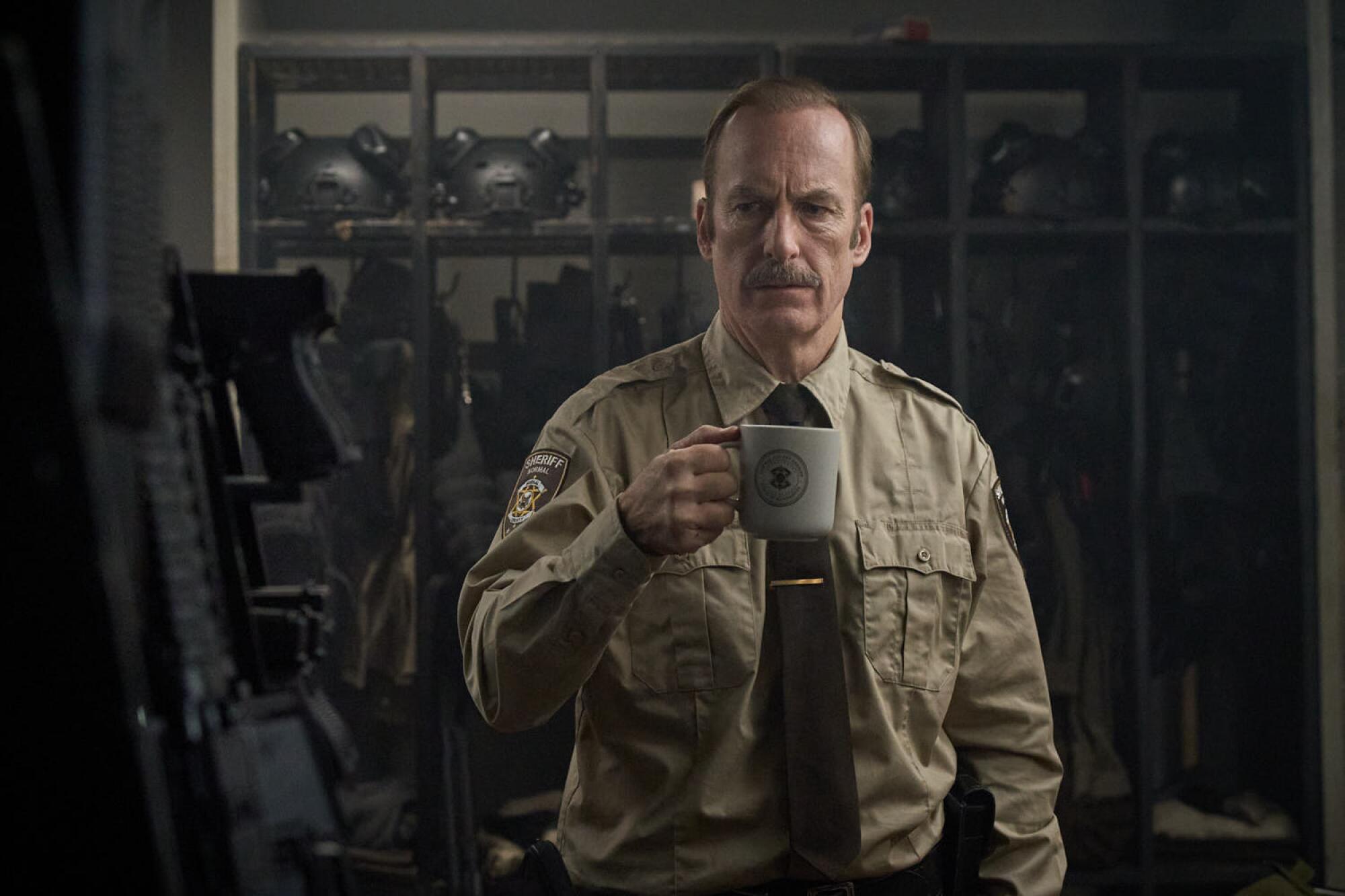
Bob Odenkirk knows what kind of action star he is and, perhaps more importantly, he isn’t.
At 63, less than five years after the heart attack that nearly ended his life, the actor understands exactly what his body is capable of. He can’t perform roundhouse kicks or elaborate gymnastics. He can’t dodge 30 punches in a row. He’s the same age as Tom Cruise, but you won’t see him hanging from the wing of a plane or running across rooftops “Mission: Impossible”-style.
“Tom Cruise is just in better shape than me,” Odenkirk says over Zoom from New York, using the gravelly, matter-of-fact Midwestern accent that has carried him from his ’90s alternative sketch comedy series “Mr. Show” through his Emmy-winning role as Saul Goodman in “Breaking Bad” and “Better Call Saul” and films like “The Post” and “Nebraska.” “I mean, he can do things that I can’t sell.”
What Odenkirk can sell, as his unlikely portrayal of a suburban father with a violent past in the 2021 hit “Nobody” and last year’s sequel “Nobody 2” made clear, is something more specific and, in its own way, much more interesting. He can show you what it feels like when your neighbor—a guy who could teach an intro to business class at night school—is capable of lethal violence. And he can be charming and funny while doing it.
“There’s a certain type of fight I can do that suits my face and body type,” Odenkirk explains. “I can play a guy who wears the other guy down. He’ll do the simplest moves he can find, and they’ll be difficult and hurtful. That’s what I can do.”
If it wasn’t already clear that Odenkirk isn’t your typical action star, his new film, “Normal,” should seal the deal. In theaters Friday after a strong reception at SXSW last month, the darkly comic, genre-bending neo-Western stars him as Ulysses, a principled small-town sheriff who takes a temporary assignment in a sleepy corner of Minnesota called Normal. Haunted by a failed marriage and a botched past case, he arrives hoping for a quiet time and instead stumbles upon a mystery involving his dead predecessor and a town whose friendly residents are suspiciously heavily armed and sitting on a vast amount of wealth. As he begins to pull the strings, Ulysses finds himself pitted against not only the entire community but, improbably, given the setting, the yakuza.
Bob Odenkirk as Sheriff Ulysses in the film “Normal”
(Magnolia Images)
Independent distributor Magnolia’s biggest theatrical success to date (opening on about 2,000 screens), “Normal” has enough over-the-top violence and elaborately choreographed kills to satisfy anyone who comes for carnage. But for Odenkirk, it was the prospect of a slow burn that captivated him, with an opening stretch that feels closer to “Fargo” before the chaos reaches almost cartoonish proportions.
“This one had, like, an act and a half of mystery and a humorous look at small-town people,” he says. “That was the part where I thought, I want to do that . Because, you know, otherwise you don’t need me: get Jason Statham.
Setting the film in the Midwest helped tailor it to Odenkirk’s unique temperament. The Illinois-born and raised actor developed the story with “Nobody” screenwriter Derek Kolstad, best known for creating the “John Wick” franchise, and the two quickly bonded over a shared sensibility.
“Bob ha subito abbracciato questa idea perché è cresciuto a Naperville”, afferma Kolstad. “Sono cresciuto a Madison, nel Wisconsin, e abbiamo capito perfettamente la mentalità delle piccole città e come si possa avere la cipolla di un segreto profondo e oscuro. Amiamo le piccole città. Non le prendiamo in giro.”
Il personaggio che hanno costruito per “Normal” era intenzionalmente meno mitico e più concreto rispetto all’ex assassino del governo che Odenkirk interpreta in “Nessuno”.
“È molto più frammentario e interiore e meno legato alla rabbia maschile”, afferma il regista inglese del film Ben Wheatley, noto soprattutto per film che hanno rivoluzionato il genere come “High-Rise” del 2015 e “Free Fire” del 2016, che ha attinto a influenze che vanno dai western ai film d’azione di Hong Kong allo slapstick di Three Stooges e “Evil Dead II”. “Ulisse sa combattere, ma non si tratta di diventare una specie di spettro vendicativo che si muove nel film eliminando le persone. È azione, ma con empatia.”

“Più invecchi, più ti rendi conto che non sai cosa sta succedendo”, dice Odenkirk. “Mi piace interpretare una persona che ha quel livello di esperienza del mondo.”
(Christina House/Los Angeles Times)
Per Odenkirk, parte del fascino era l’opportunità di interpretare qualcuno più vicino a dove si trova adesso, non solo fisicamente ma emotivamente. “Adoro la possibilità di interpretare qualcuno che ha la mia età, che forse era orgoglioso e pieno di sé quando era più giovane e poi ha fatto delle scelte sbagliate e si sente un po’ perso”, dice. “Più invecchi, più ti rendi conto che non sai cosa sta succedendo. Mi piace interpretare una persona che ha quel livello di esperienza del mondo.”
Da quando è sopravvissuto al suo attacco di cuore da “vedovo” sul set del New Mexico di “Better Call Saul” nel 2021 – un evento che lo ha lasciato privo di sensi per un giorno e senza alcun ricordo della settimana successiva – Odenkirk ha poco interesse a proiettare l’invincibilità. Se non altro, l’esperienza ha rafforzato il valore del tipo di lavoro che ha svolto.
“La verità è che il film d’azione mi ha aiutato a salvare il cuore”, dice Odenkirk, sottolineando che i due anni di intenso allenamento che ha fatto per “Nessuno” hanno contribuito a rafforzare il flusso sanguigno che ha impedito al suo cuore di subire danni duraturi.
Le conseguenze della sua esperienza di pre-morte, dice, furono altrettanto profonde. “La cosa più importante era proprio questo apprezzamento per il fatto di essere vivi”, ricorda Odenkirk. “In quelle prime due settimane mi sono svegliato senza alcuna preoccupazione. Ogni mattina ho riscoperto il mondo e l’ho amato. Quella sensazione è svanita: non è più completa e pura come lo era. Ma so che è lì.”
Questo cambiamento ha influenzato l’approccio di Odenkirk al suo lavoro. Negli ultimi anni, si è mosso più liberamente tra cinema, televisione e teatro, inclusa una nomination ai Tony l’anno scorso per la sua interpretazione del fallito venditore immobiliare Shelley Levene nel revival di Broadway della commedia di David Mamet “Glengarry Glen Ross”, scegliendo i ruoli non tanto per come si incastrano quanto per quanto lo portano lontano da ciò che ha fatto prima.
“Penso che lo faccia per sorprendere se stesso”, dice il suo co-protagonista “Normal” Henry Winkler, che ha stretto amicizia con l’attore anni fa quando si sono incontrati alla registrazione di “Late Night With Seth Meyers”. “Quando scegli questa professione, non dici solo le parole. Il divertimento è far vivere qualcuno con cui non necessariamente ti identifichi.”
Ciò che verrà dopo, per stessa ammissione di Odenkirk, sta ancora prendendo forma. In questa fase, l’attore, che ha una casa a New York ma vive principalmente a Los Angeles, sta deliberatamente dando la priorità alle cose che vuole veramente fare piuttosto che affrettarsi a programmare il prossimo lavoro. Recentemente ha scalato Machu Picchu con il suo amico di lunga data e co-protagonista di “Mr. Show” David Cross, filmando il viaggio per un documentario, e ha aiutato suo figlio – uno dei due figli adulti che condivide con sua moglie Naomi, una produttrice, che ha sposato nel 1997 – a sviluppare un pilota televisivo.
“Non sto correndo per riempire il mio carnet di ballo”, dice, quasi per inciso. “Potrei essere in pensione.” Dopo aver lasciato in sospeso il pensiero per un momento, sorride e scuote la testa. “Non credo. Nessuno lascia il mondo dello spettacolo.”

Odenkirk, a destra, e Donald Webber Jr. nel revival di Broadway del 2025 di “Glengarry Glen Ross”.
(Emilio Madrid)
C’è una versione della fase successiva di Odenkirk che è facile da immaginare: una serie di ruoli d’azione durevoli e sempre più cupi a fine carriera, del tipo che ha tenuto attori come Liam Neeson a lavorare costantemente fino ai 70 anni. Ma Odenkirk sembra meno interessato a stabilirsi in quel ritmo che a rimodellarlo. “Capisco che il pubblico va a vedere armi, morte e sangue”, dice. “Ma per quanto mi riguarda, devo stare attento a quanto di questo metto nel mondo.”
Una possibilità di cui ha discusso attivamente con Kolstad spinge quasi nella direzione opposta, ispirata da un amore reciproco per Jackie Chan. “Quei primi film di Jackie Chan sono davvero alla Buster Keaton: molto simpatici, non cruenti”, dice. “Questo sarebbe essenzialmente PG. Si potrebbe anche dire di classe G. Non ci sarebbe sangue. È un combattimento intelligente che ti fa sorridere e ridere.”
And if “Normal” is a box office success, he’s already thinking about where he might go after Ulysses. Odenkirk and Kolstad have started exploring ideas for extending the character into an ongoing franchise. “I’ve never played a character I feel so close to,” he says. “With Saul and even ‘Nobody,’ getting into that guy’s shoes is a little challenging. This guy is much less challenging, and I enjoy playing him. So I can imagine reprising his story.”
A little later in our conversation, he pulls out his phone, scrolls for a second, then presses play. What comes out of the speaker is a demo he recorded singing a tune from a Tom Lehrer-style satirical show: “It’s a New York night and it feels so right / The lights of New York are shining… in Chicago.”
The song is part of an album he’s recording called “Odenkirk Sings Nutter,” featuring comedic numbers written by writer and playwright Mark Nutter, a longtime friend. Nutter, he explains, has spent years writing edgy, absurdist songs and musicals that have largely gone under the radar. The album is an effort to change that.
“Like an action movie, the idea is: If I can do it even respectably, I’ll blow everyone’s minds,” he says. “They’ll say, ‘Are you kidding me?’ If I had a dream, it would be someone listening to this and saying, ‘Who is this guy?’ Why don’t we take some of these songs or one of his musicals and have people who can actually sing perform them?”
He smiles, more at the attempt than the result.
“My entire career has felt risky, dangerous, and potentially very embarrassing on a world stage,” Odenkirk says. “Part of me says I’m not giving up… and that it’s okay to feel embarrassed. I don’t know if that’s true. But I’m willing to take the risk.”